


How RESPIRA-ABEP Built a New Research Agenda on Air, Waste and Health
- Nick Rahier

- Dec 26, 2025
- 3 min read
At the end of August 2025, the RESPIRA-ABEP project formally came to a close. What began as a seed-funded collaboration under the Una Europa – Africa Partnership programme has, over the past year, grown into a vibrant interdisciplinary network that now spans Kenya, the Democratic Republic of Congo, Belgium, the Netherlands and Spain.


RESPIRA-ABEP – Respiratory Health, Outdoor Air Pollution and Solid Waste Management: A Built Environment Perspective – was never meant to be just another academic exercise. From the very start, it set out to connect built environment research with respiratory health, waste management and air quality monitoring, while grounding all of this in the lived realities of African cities.
Building a network across continents
The project officially kicked off in July 2024 with an online “Meet the Team” session, bringing together colleagues from KU Leuven, Leiden University, the University of Nairobi, the University of Kinshasa and Complutense University of Madrid. What followed was a dense calendar of coordination meetings, joint literature reviews, and capacity-building activities that laid the groundwork for a genuinely transdisciplinary collaboration.
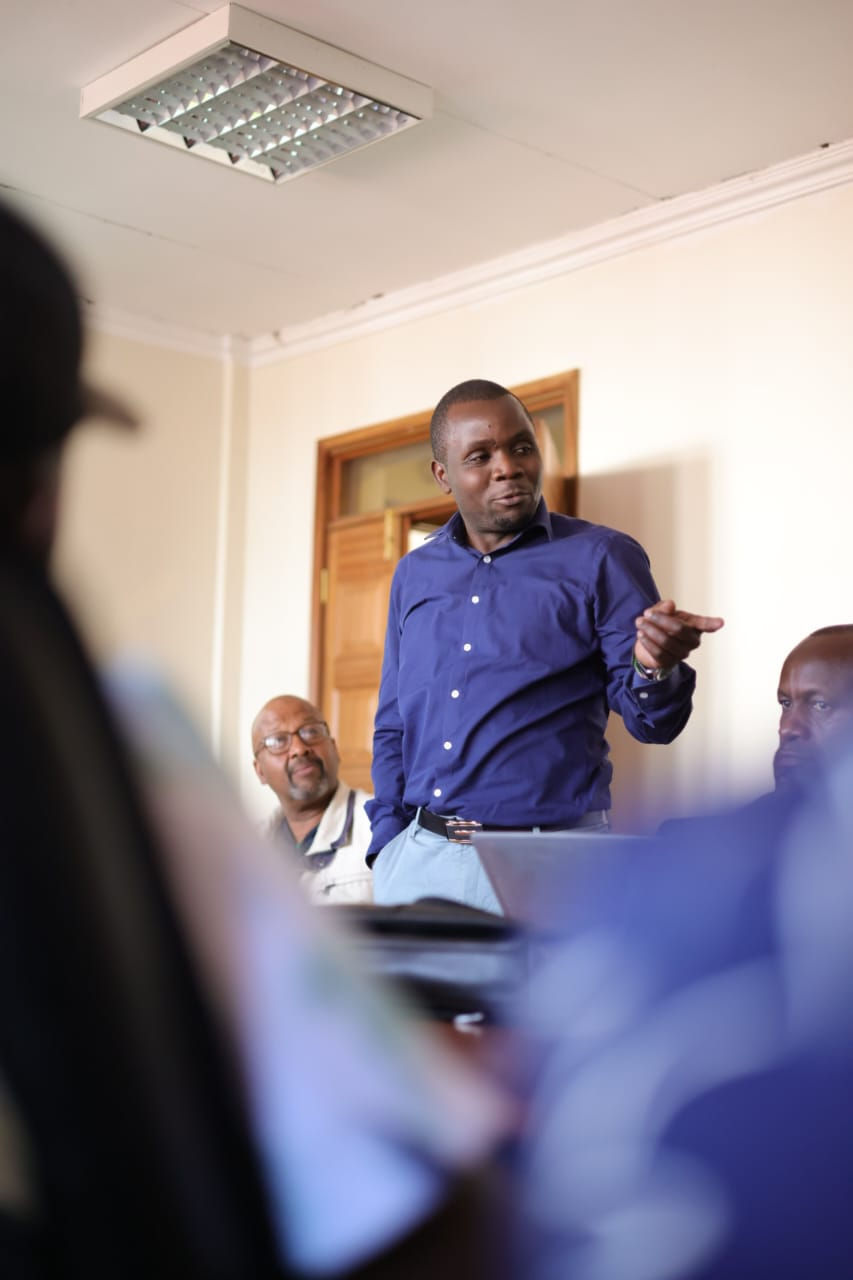
A major milestone was the one-week in-person workshop in Kenya in November 2024. Hosted in Nairobi and Nakuru, this workshop combined literature presentations with field visits to Dandora and Gioto dumpsites, a Tetra Pak recycling facility in Thika, and meetings with stakeholders from UN-Habitat, the Stockholm Environment Institute, Nakuru County, Egerton University and community waste-picker associations. For many participants, this was the moment when abstract discussions about air quality and waste became tangible, visceral and political.
From waste to health: learning across systems
Throughout the project, a recurring theme was the need to treat air pollution, waste management and respiratory health as a single, entangled system rather than as separate policy silos. This was powerfully illustrated during Dr Vincent Kitio’s online lecture in October 2024 on the links between open dumping, open burning and air quality inequity, where IQAir data from Nairobi’s Dandora dumpsite showed persistent PM2.5 peaks far above WHO standards.
Later, during the March 2025 European mobility, the team visited Madrid’s Valdemingómez waste management complex. Here, participants saw how waste streams are separated at source, how methane is recovered from closed landfill basins, and how only around 15% of waste ultimately ends up in isolated dumping cells. The contrast with Kenyan dumpsites sparked rich debate on what “good practice” actually means across very different socio-economic contexts.
Sharing knowledge, building futures
The project’s collaborative energy carried through to multiple public-facing moments: an open lecture at KU Leuven in March 2025, a workshop session at the AirQo Clean Air Forum in Nairobi in July 2025 titled “Interdisciplinary Data Fusion – Turning Pollution Data into Public Engagement and Policy Momentum”, and a symposium paper presented at the Relating Systems Thinking and Design conference in October 2025.
These moments helped crystallise a shared insight: tackling air pollution requires not only better sensors or smarter models, but new ways of combining satellite data, ground-level measurements, citizen science, built-environment analysis and social research into actionable knowledge.
Looking ahead
While RESPIRA-ABEP has officially ended, its most important outcomes are only now taking shape. A joint position paper is in preparation, and – crucially – Leiden University has taken the lead in developing a Marie Skłodowska-Curie Doctoral Network proposal, FOCUS-AFRICA, aiming to train a new generation of African air-quality leaders through an interdisciplinary, international consortium.
In the words of the team, the project “opened up a whole new research agenda on air pollution, urban waste, built environment perspective, air quality monitoring, the role of AI and citizen science.” It also proved that seed funding, when paired with trust, mobility and shared commitment, can catalyse collaborations that extend far beyond a single grant cycle.


Comments